Gentle Yoga, Healing & Community Sanctuary

Rest, Reconnect, and Find Stillness with Yoga Nidra
Bethany Crawford | APR 15, 2025
yoga healing
yoga nidra benefits
koshas and yoga
science of yoga nidra

In today’s fast-paced world, it’s easy to feel unanchored. Life demands so much of us, leaving little room to rest, reconnect, and find stillness. Yoga Nidra offers a powerful antidote—a practice of deep relaxation and awareness that invites us to return to our true nature. Rooted in ancient wisdom, this guided meditation practice helps us ground ourselves, build trust within, and embark on a journey of profound transformation.
What is Yoga Nidra?
Yoga Nidra, often translated as “yogic sleep,” is a practice that bridges the gap between wakefulness and sleep. Unlike typical meditation, Yoga Nidra guides practitioners into a state of conscious rest, where the mind becomes quiet, the body relaxes deeply, and self-awareness blossoms. Despite its name, Yoga Nidra is not about sleeping; instead, it’s about waking up to the deeper layers of our being.
Swami Satyananda Saraswati describes Yoga Nidra as “a systematic method of inducing complete physical, mental, and emotional relaxation.” Through this method, practitioners can release stress, heal emotional wounds, and access their inner wisdom.
An easy way to understand Yoga Nidra is as a practice of listening—a guided meditation where students are invited to experience themselves as Presence. Through this mindfulness practice, they become aware of various sensations, thoughts, emotions, and feelings, discovering that they are larger than any of these individual aspects. Yoga Nidra gently reveals our expansive nature, allowing us to witness the layers of ourselves and rest in the understanding that we are both the observer and the observed.
Jiddu Krishnamurti captures the heart of this practice, saying, “The ability to observe without evaluating is the highest form of intelligence.” Yoga Nidra teaches us to witness our thoughts, emotions, and sensations without judgment, allowing us to cultivate clarity and a sense of wholeness.
Understanding the Koshas: Layers of Being
The koshas, or "sheaths," are a key framework in yogic philosophy that represent the layers of a person’s being, from the physical body to the deepest essence of the self. They are important to Yoga Nidra because the practice systematically guides us through each layer, helping us explore and transcend the limitations of our identity, conditioning, and mental patterns. This journey through the koshas allows for profound relaxation, self-awareness, and healing.
Here’s why each kosha matters in Yoga Nidra:
- Annamaya Kosha (Physical Body):
Yoga Nidra begins by drawing attention to the body. This layer represents the physical form, and by focusing on sensations like heaviness, lightness, or warmth, we ground ourselves in the present moment. Relaxing the physical body sets the stage for accessing deeper layers. - Pranamaya Kosha (Energy Body):
The breath and life force (prana) reside in this layer. Yoga Nidra often incorporates breath awareness to calm the nervous system, balance energy, and create a bridge between the physical and subtler aspects of being. - Manomaya Kosha (Mental-Emotional Body):
This kosha encompasses the mind, emotions, and conditioned thought patterns. Yoga Nidra encourages nonjudgmental observation of thoughts and feelings, helping us detach from them. This can release emotional blockages and foster clarity. - Vijnanamaya Kosha (Wisdom Body):
As we go deeper, we access the layer of intuition and insight. Yoga Nidra opens the door to this kosha, allowing us to connect with our inner wisdom and uncover the truths that guide our lives. - Anandamaya Kosha (Bliss Body):
The innermost layer, the bliss body, is the essence of joy, peace, and our true nature. Yoga Nidra leads us to this state of pure awareness, where we experience a sense of wholeness and unity, untouched by external circumstances.
By systematically guiding us through the koshas, Yoga Nidra helps us explore the interplay between these layers. It peels back the layers of stress, tension, and conditioning, ultimately leading us to a state of deep rest, self-awareness, and connection with our true self.
The Science of Yoga Nidra
Yoga Nidra’s transformative effects are supported by science. The practice guides the brain through different states of consciousness:
- Beta: Active, alert thinking.
- Alpha: Relaxed and meditative, fostering creativity and intuition.
- Theta: A dreamlike state of deep relaxation and visualization.
- Delta: The state of deep sleep, where restoration and healing occur.
By accessing these states, Yoga Nidra promotes profound rest, reduces stress, and enhances overall well-being. It’s also been shown to increase serotonin and dopamine levels, supporting emotional resilience.
Practicing Yoga Nidra offers profound benefits to the brain and body by influencing the production and regulation of key brain chemicals, which contribute to relaxation, emotional balance, and overall well-being. Here’s how:
- Stress Reduction: Decreasing Cortisol Levels
Yoga Nidra activates the parasympathetic nervous system, also known as the "rest and digest" system, helping to lower cortisol levels, the primary stress hormone. This shift reduces the physical and mental effects of chronic stress, promoting deep relaxation and restoring balance. - Boosting Feel-Good Chemicals: Serotonin and Dopamine
The practice increases serotonin and dopamine levels, which are responsible for improving mood, promoting a sense of calm, and enhancing motivation. Elevated serotonin levels also play a crucial role in regulating sleep and emotional stability. - Releasing Oxytocin: The Love Hormone
Yoga Nidra can encourage the release of oxytocin, often called the “bonding” or “love hormone.” This contributes to feelings of safety, connection, and inner peace, which are especially important for emotional healing. - Enhancing GABA: The Calming Neurotransmitter
Yoga Nidra stimulates the production of gamma-aminobutyric acid (GABA), a neurotransmitter that calms the nervous system, reduces anxiety, and improves sleep quality. Increased GABA levels have been linked to a reduction in symptoms of depression and anxiety. - Promoting Brainwave Shifts: From Beta to Delta States
During Yoga Nidra, the brain transitions from active beta waves (associated with wakefulness) to slower, more restorative alpha, theta, and delta waves. These states are associated with relaxation, creativity, and deep healing. Theta and delta waves, in particular, facilitate a state of profound rest and access to the subconscious mind, enabling emotional release and mental clarity. - Neuroplasticity and Emotional Regulation
Regular practice of Yoga Nidra can enhance neuroplasticity—the brain's ability to rewire itself. This can lead to healthier thought patterns, improved emotional regulation, and greater resilience in the face of stress.
In essence, Yoga Nidra creates a biochemical environment that fosters healing, clarity, and a sense of inner peace. By balancing stress hormones and enhancing feel-good chemicals, it supports not just physical rest but emotional and psychological transformation as well.
Albert Einstein’s famous quote, “A problem can never be solved by the same mindset that created it,” resonates deeply here. Yoga Nidra shifts our mental state, allowing us to approach life with greater clarity and openness.
Why Practice Yoga Nidra?
The benefits of Yoga Nidra extend far beyond relaxation. This practice can:
- Alleviate stress and anxiety
- Improve sleep quality
- Enhance focus and creativity
- Support emotional healing and resilience
- Cultivate inner peace and clarity
- Strengthen the connection between mind, body, and spirit
,
Through regular practice, Yoga Nidra becomes a tool for transformation—helping us navigate life’s challenges with grace and equanimity.
Join Us for a Yoga Nidra Workshop
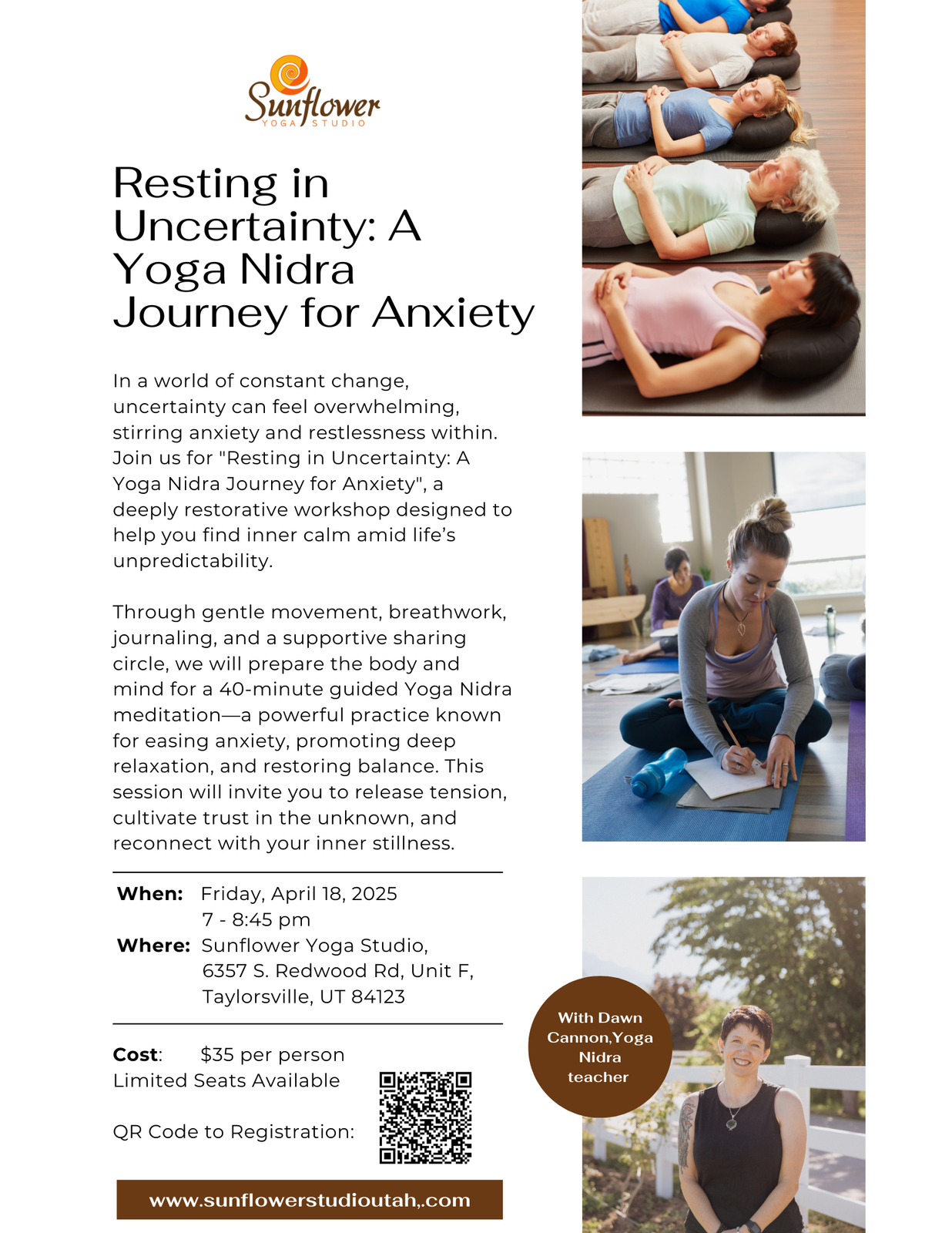
Are you ready to experience the rest, connection, and stillness that Yoga Nidra offers? We invite you to join us for an in-person Yoga Nidra workshop focused on anxiety at Sunflower Yoga Studio in Taylorsville, UT, on Friday, April 18 from 7:00 to 8:45 pm. This workshop provides a nurturing space to explore this powerful practice and reconnect with your inner self.
Top Photo Credit: <a href="https://www.vecteezy.com/free-photos/sleep-meditation">Sleep Meditation Stock photos by Vecteezy</a>
Bethany Crawford | APR 15, 2025
Share this blog post


© 2026 Sunflower Yoga Studio